◆ QUEST LOG / GENDER CLASSIFICATION
Three CNNs walk into a bake-off
Same data, same training budget, three architectures — and a decision framework instead of a single accuracy number.
01The task
Binary gender classification on the CelebA celebrity faces dataset — a classic benchmark task, which is exactly why it makes a good controlled experiment. The question wasn’t “can a CNN do this” (it can) but which architecture earns its compute when you hold everything else constant.
02The contenders
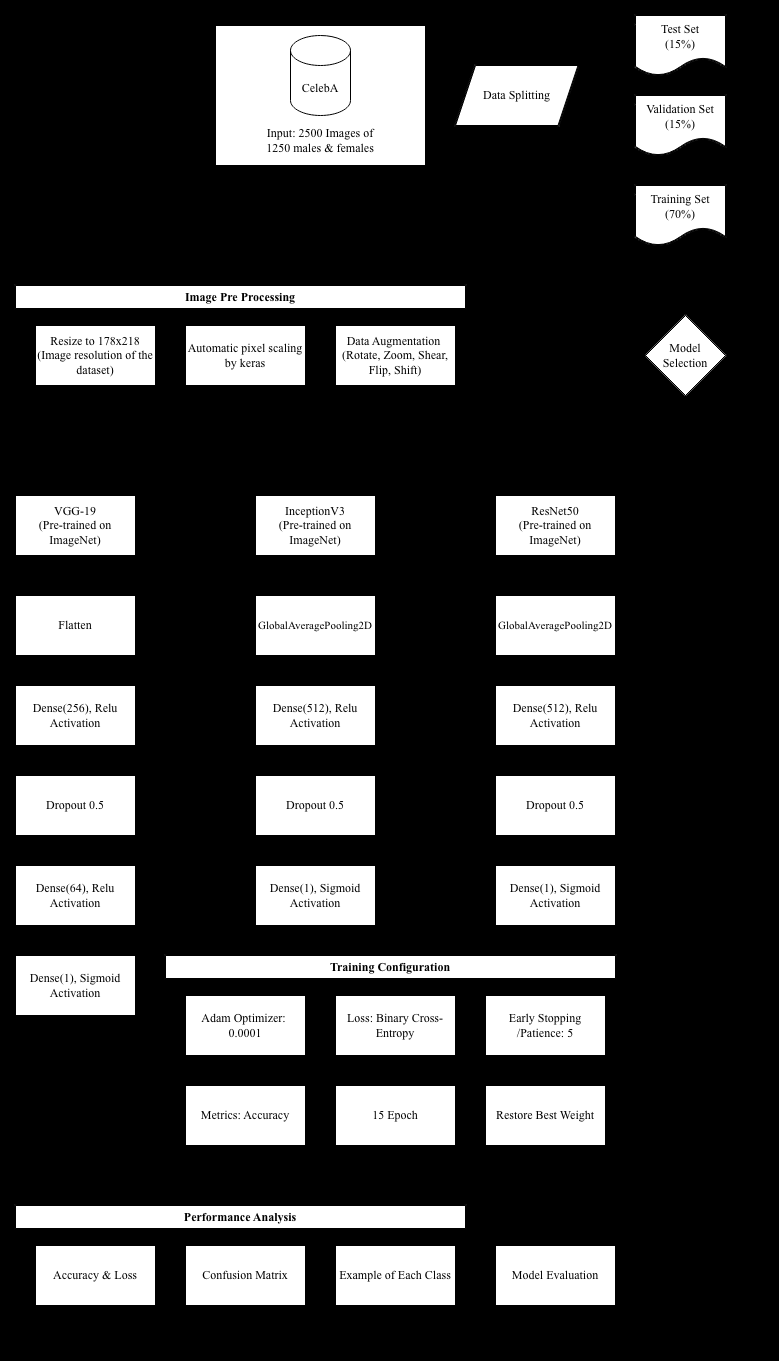
Three ImageNet-pretrained architectures, each fine-tuned the same way:
- VGG-19 — the heavyweight classic: simple, deep, and expensive.
- InceptionV3 — multi-scale filters designed for efficiency.
- ResNet50 — skip connections, the default choice of its era.
03Results
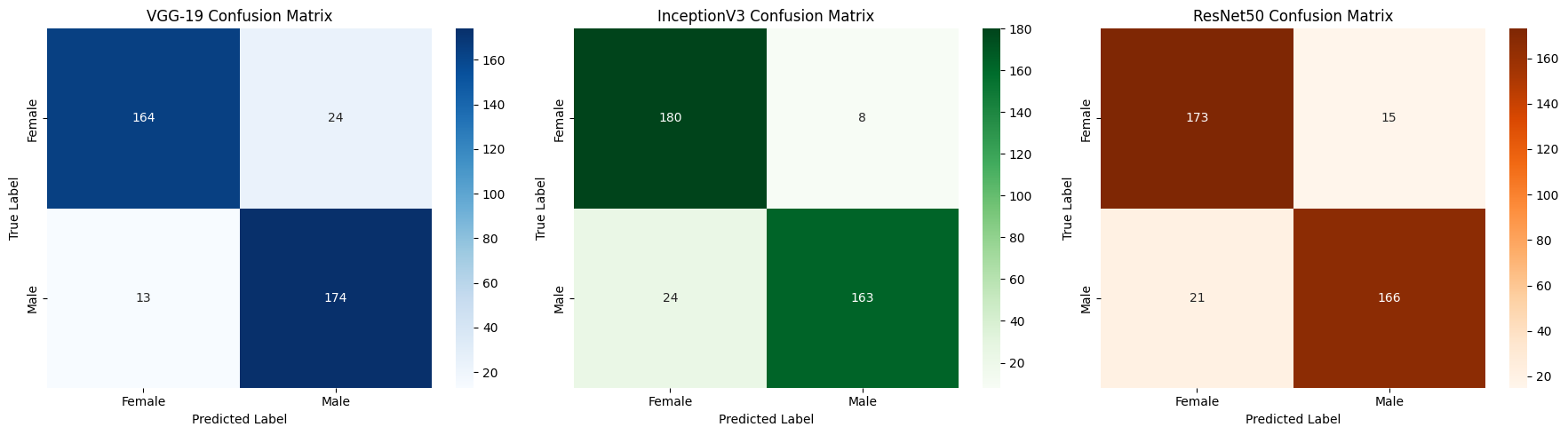
InceptionV3 led at ~91.5% accuracy, but the ranking is the least interesting part. The comparison covered precision and recall per class, confusion matrices, and inference time — because a model that misclassifies one class disproportionately, or takes twice as long per image, can lose in production even when it wins on the leaderboard.
04What I learned
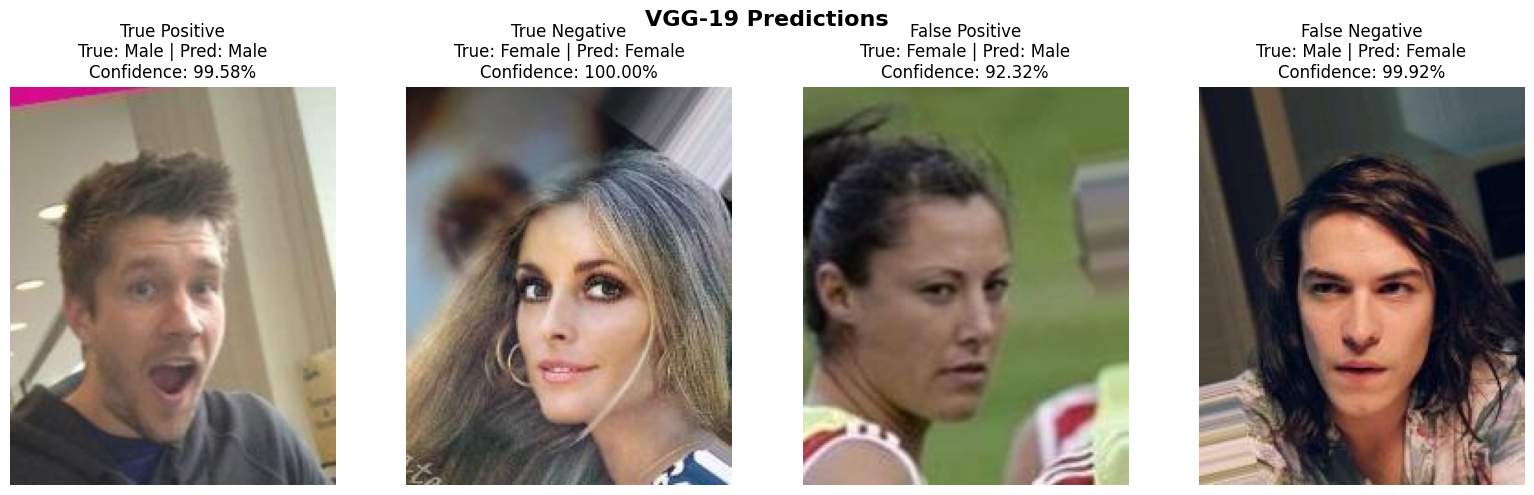
Transfer learning makes the first 90% almost free — the craft is in the evaluation. Designing the comparison (same splits, same augmentation, same budget) mattered more than any architectural choice, and reading confusion matrices taught me more about the models than the accuracy scores did. This project is also where my habit of benchmarking cost alongside quality started — it shows up again in my NLP and LLM work.